
Solana DeFi keeps growing when stablecoins, trading activity, liquidity venues, and application developers reinforce one another on the same settlement network. Fast confirmation and comparatively low transaction costs can make frequent onchain actions more practical, while shared token standards, wallets, and liquidity routes reduce the work required to launch or integrate a product.
That is a market-structure explanation, not a permanent-growth forecast. The loop can weaken when liquidity is incentive-dependent, stablecoin supply contracts, execution quality deteriorates, smart-contract risk materializes, or users lose confidence in network access during volatile periods.
Key takeaways
Stablecoins give Solana DeFi a practical unit for trading, collateral, payments, and treasury movement.
High-capacity execution can support transaction-heavy products, including aggregators, market makers, perps venues, and payment flows.
Liquidity becomes more useful when wallets, aggregators, lending markets, and exchanges can route through connected pools.
Builders benefit from an existing distribution and integration surface, though they still face security, economic, and reliability constraints.
TVL, volume, and active-address figures are incomplete on their own. Review their composition, incentives, and time period before drawing conclusions.
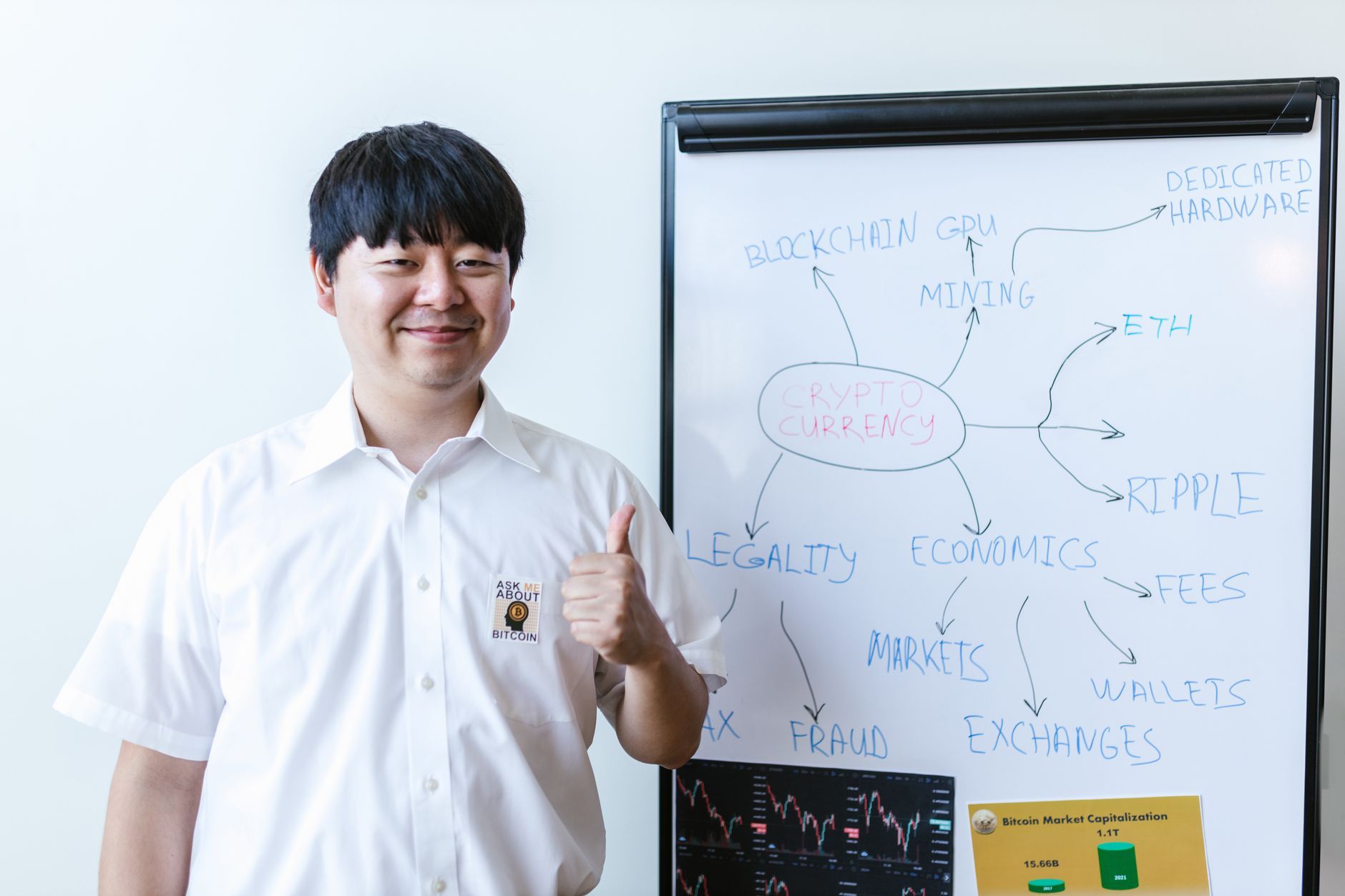
Stablecoins connect core Solana DeFi user flows.
Image source: Photo by RDNE Stock project via Pexels · License
Stablecoins supply the settlement layer
Stablecoins are the working capital of much of DeFi. They are commonly used as quote assets in swaps, margin collateral, lending liquidity, payment balances, and protocol treasuries. When users and businesses already hold stablecoins on a chain, a new application has a clearer path to activity than one that must first persuade users to bridge capital and accept a new settlement asset.
On Solana, the same stablecoin balance can move among wallets, decentralized exchanges, lending protocols, and payment-oriented applications. This reduces operational friction for users, although each transfer and application interaction still carries counterparty, contract, wallet, and compliance considerations.
For readers assessing stablecoin claims, separate three questions: who issues the token, what supports redemption, and where the token is actually usable. For example, Circle publishes USDC transparency and reserve reporting, which is relevant to issuer disclosure. It does not establish the safety of every protocol that accepts USDC, nor does it validate any yield opportunity built around it.
Stablecoins can move through several applications, creating shared settlement demand.
Why settlement activity can attract liquidity
A market maker or liquidity provider generally prefers venues with repeatable flow, workable execution, and ways to manage inventory. More stablecoin-denominated flow can improve the usefulness of markets, while deeper markets can improve execution for users. That feedback loop is conditional. Liquidity providers also price volatility, adverse selection, rewards, and the operational risk of capital deployed in smart contracts.
The useful analytical question is therefore not simply, "How many stablecoins are on Solana?" Ask where they sit, whether they are freely usable, whether they are borrowed or incentive-seeking, and whether their use persists after temporary rewards change.

Execution quality matters as much as nominal network capacity.
Image source: Photo by Luca Sammarco via Pexels · License
Throughput changes product design, but does not eliminate execution risk
Solana's architecture is designed for parallelized transaction processing and a high-frequency application environment. In DeFi, that can support workflows where users expect frequent updates, rapid order placement, transaction batching, or inexpensive rebalancing. The Solana developer documentation on transactions is the appropriate primary reference for how transactions are assembled and processed, rather than a headline throughput claim detached from network conditions.
The product implication is important. When an application can assume users will tolerate multiple onchain actions, its interface and economics can differ from a product designed around scarce blockspace. Aggregators can request quotes across venues, vaults can rebalance subject to their rules, and trading systems can offer more active execution patterns.
Low-friction execution can enable active onchain workflows, but users still need to evaluate slippage, fees, and confirmation conditions.
Capacity is only one part of execution quality
A chain's theoretical or observed capacity does not guarantee a good trade. A user can still face price impact, failed or delayed transactions, priority-fee changes, stale quotes, validator or RPC issues, and MEV-related execution concerns. Protocol teams also depend on indexers, RPC providers, oracle feeds, front ends, and keepers. Each dependency can become a failure point.
For that reason, throughput should be treated as an enabling condition. Durable usage requires reliable interfaces, sensible transaction design, liquid markets, clear risk disclosures, and products that solve a real user problem.

Liquidity is most useful when market venues and user flows connect.
Image source: Photo by Jakub Zerdzicki via Pexels · License
Liquidity compounds when venues and protocols connect
Liquidity is more than a total locked-value number. It is the ability to exchange or borrow an asset at a given size, price, and moment with acceptable execution. Solana's DeFi stack can concentrate that usefulness when decentralized exchanges, routing aggregators, lending markets, derivatives venues, wallets, and market makers work with the same assets and settlement layer.
A typical path illustrates the connection: a user funds a wallet with a stablecoin, swaps into an asset through a routed venue, uses that asset or stablecoin as collateral, and later repays or rebalances through another route. Each step creates potential demand for liquidity and infrastructure. Each step also adds protocol and operational risk.
Connected venues can improve capital mobility, while also increasing the importance of dependency mapping.
Read TVL and volume with context
Public dashboards can help researchers observe trends, but they should not be read as audited statements or proof of protocol quality. DefiLlama's Solana dashboard offers a useful starting point for checking a time-stamped view of TVL and protocol composition. Before citing any figure, record the access date, inspect the methodology, and distinguish native assets from bridged assets, borrowed positions, and incentive-driven deposits.
Volume also needs context. A rise in volume may reflect genuine user demand, market volatility, automated activity, points programs, or a short-lived token event. The same applies to fee and revenue figures. Researchers should identify who receives fees, what costs are excluded, and whether a protocol's incentives exceed its recurring economic activity.
Why builders keep shipping on shared rails
Builders are drawn to ecosystems where users, wallets, stablecoins, token programs, developer tools, and liquidity already exist. A new Solana application can focus on a differentiated market, strategy, interface, or distribution channel while integrating with established settlement and routing infrastructure.
This creates composability benefits, but it also creates concentration risk. Several applications may rely on the same oracle, liquidity venue, wallet connection standard, RPC service, or stablecoin issuer. A strong protocol assessment maps these dependencies before treating integration breadth as a pure advantage.
For protocol teams, the practical question is: does the product create repeatable user value after launch incentives decline? For researchers, it is: which parts of the user journey are native demand, and which are subsidized acquisition? For liquidity providers, it is: what risks are being accepted in exchange for the stated return? Those are different questions, and none can be answered by a chain-level activity chart alone.
What can interrupt Solana DeFi growth
The same tight integration that supports growth can transmit stress quickly. Key risks include:
Smart-contract and oracle risk: A vulnerability, incorrect price feed, or flawed liquidation design can impair user funds or market operations.
Liquidity fragmentation: Capital spread across many pools or assets may look large in aggregate while producing poor execution for meaningful trade sizes.
Incentive dependence: Token emissions, points, and rebates can attract capital that leaves once rewards change.
Stablecoin concentration: Heavy reliance on a small set of issuers or assets creates issuer, redemption, regulatory, and depegging exposure.
Infrastructure dependence: RPC outages, wallet issues, indexer failures, and front-end compromises can disrupt access even when a protocol's contracts remain live.
Network and congestion conditions: During periods of intense demand, users may experience degraded execution or changed transaction costs.
Regulatory uncertainty: Rules affecting issuers, interfaces, access controls, or market participants can alter product availability and liquidity.
None of these risks means the growth thesis is invalid. They define the conditions that must be monitored for growth to be durable.
How to evaluate growth without relying on headline metrics
Use a repeatable, date-stamped review process:
Start with the user flow. Identify the asset entering the application, the action performed, the counterparties involved, and the asset leaving it.
Map the dependencies. List the contracts, oracles, stablecoins, bridges, venues, keepers, RPC providers, and wallet surfaces required for the flow.
Inspect liquidity quality. Check depth at relevant trade sizes, collateral concentration, borrow utilization, liquidation pathways, and the cost of exiting.
Separate incentives from organic use. Review emissions, points programs, fee rebates, and temporary campaigns alongside activity data.
Follow the cash flow. Determine where trading fees, borrow interest, liquidation proceeds, and protocol revenue go. Do not assume token holders receive protocol revenue.
Check primary documentation. Read program documentation, audits where available, governance proposals, parameter changes, and incident disclosures.
Record the date. Solana DeFi metrics and product parameters change quickly. A conclusion without an observation date is hard to audit.
The central conclusion is straightforward: Solana DeFi grows when capital can settle, trade, borrow, and move between useful applications with acceptable friction. Stablecoins, execution capacity, connected liquidity, and builder distribution can reinforce that outcome. Sustainable growth still has to be demonstrated protocol by protocol, under real market conditions and without relying on short-term incentives.
Frequently asked questions
Why do stablecoins matter for Solana DeFi?
Stablecoins provide a common unit for trading, collateral, payments, and treasury operations. Their utility depends on issuer quality, redemption arrangements, liquidity, and the safety of the applications where they are used.
Does higher Solana throughput guarantee better DeFi trading?
No. Network capacity can support transaction-heavy products, but trade quality also depends on liquidity depth, slippage, transaction routing, priority fees, market volatility, and application reliability.
Is total value locked a reliable measure of Solana DeFi growth?
TVL is a useful snapshot of assets attributed to protocols, but it does not show liquidity quality, incentive dependence, borrowed capital, user retention, or smart-contract risk. Review methodology and composition alongside TVL.
Why do builders choose Solana for DeFi applications?
Builders can access shared settlement rails, wallet distribution, stablecoin liquidity, token standards, and existing DeFi integrations. They must still manage security, infrastructure dependencies, regulation, and sustainable economics.
What could slow Solana DeFi growth?
Growth can slow if liquidity leaves after incentives change, stablecoin supply or confidence weakens, execution deteriorates, security incidents occur, or critical infrastructure and regulatory conditions change.