
A Practical Map of Solana DeFi Liquidity
Solana DeFi works best understood as a liquidity loop rather than a collection of separate apps. SOL can be staked, represented by a liquid staking token, swapped into stablecoins, posted as lending collateral, deposited into a liquidity pool, or used as margin in perpetual futures. Each step creates dependencies on pricing, liquidity depth, smart contracts, keepers, oracles, and the ability to exit during stressed markets.
For users and protocol teams, the useful question is not which venue has the highest advertised yield. It is where the yield comes from, what asset and liquidity conditions support it, and which systems must keep functioning for an exit or liquidation to occur.
Key takeaways
- Liquid staking turns staked SOL into composable collateral, linking validator economics to DeFi markets.
- DEXs supply the exchange path for spot assets, collateral swaps, rebalancing, and liquidation flow.
- Lending markets transform deposited assets into borrowable liquidity, with utilization and liquidation design determining much of the risk.
- Perpetual venues add leveraged directional exposure and depend heavily on collateral pricing, oracle design, and liquidity backstops.
- A protocol can be individually sound while still carrying ecosystem risk through shared assets, price feeds, stablecoins, and routing infrastructure.

A system map of the main Solana DeFi liquidity paths.
Image source: Photo by Markus Winkler via Pexels · License
How to read this Solana DeFi ecosystem map
This map follows assets and obligations, not token rankings. It groups the ecosystem into five functional layers:
| Layer | Core job | Typical assets moving through it | Main dependency to inspect |
|---|---|---|---|
| Native staking | Secures the network and earns staking rewards | SOL | Validator operation, stake activation and deactivation |
| Liquid staking | Makes staked SOL transferable and usable in DeFi | Liquid staking tokens | Redemption path, validator delegation, secondary-market liquidity |
| Spot liquidity | Prices and exchanges tokens | SOL, stablecoins, liquid staking tokens, long-tail assets | Pool depth, routing, token-program and market design |
| Lending | Creates collateralized credit | Deposits, borrows, stablecoins | Collateral parameters, utilization, liquidation execution |
| Perpetuals | Provides leveraged long or short exposure | Margin collateral, funding payments | Oracle inputs, market-maker or vault liquidity, socialized-loss rules |
The named applications within each layer change quickly. For a current inventory, verify contracts, supported assets, risk parameters, and product availability in the protocol's own interface and documentation. This article describes the market structure, rather than endorsing a protocol or treating a token listing as an investment recommendation.
Caption: SOL and stablecoin liquidity can circulate through several venues before it returns to a wallet or validator stake.
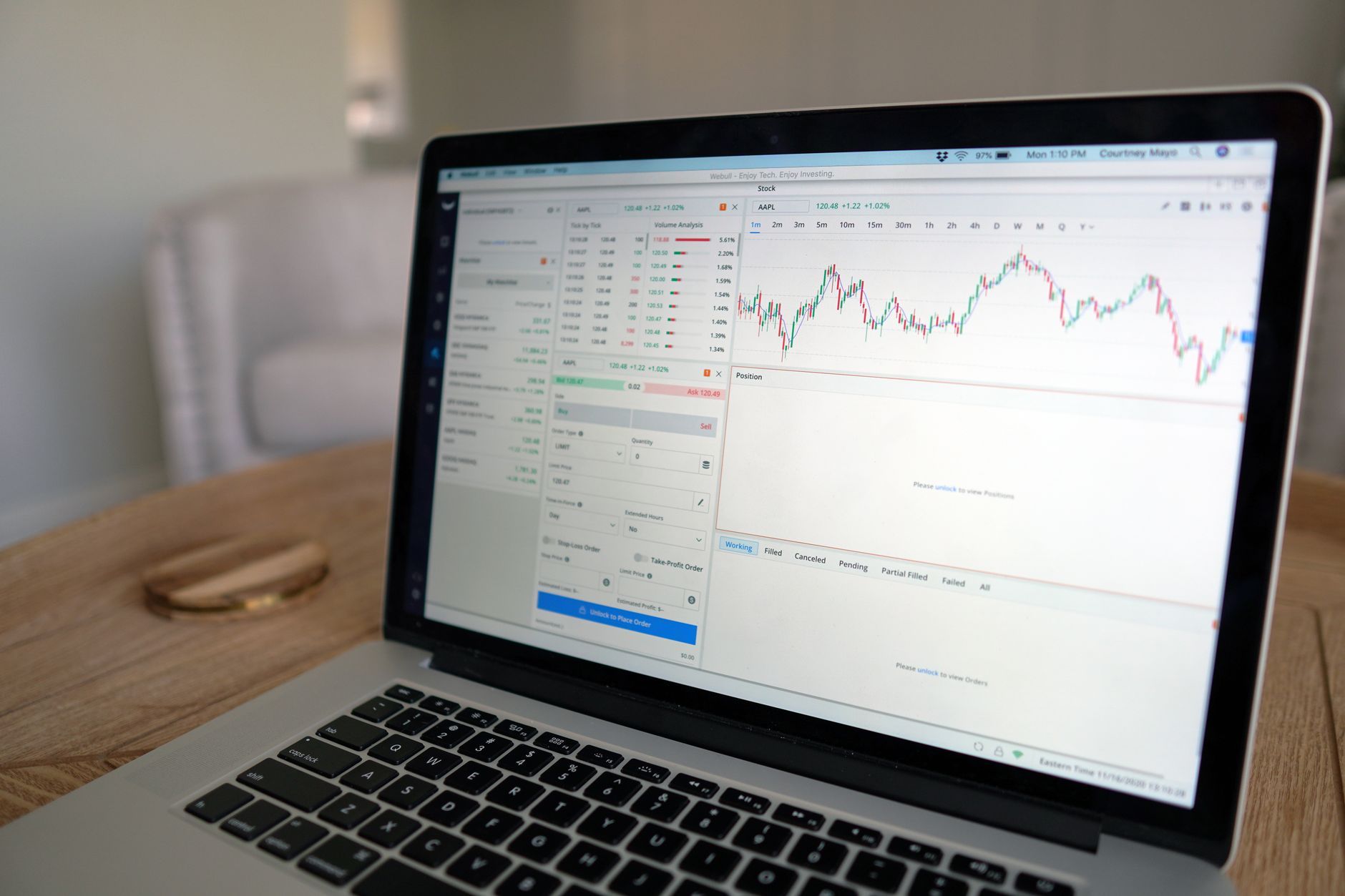
A route is only as reliable as the liquidity sources and token markets it uses.
Image source: Photo by Joshua Mayo via Pexels · License
The liquidity loop: SOL, liquid staking tokens, and stablecoins
SOL is the ecosystem's core collateral asset, but native staking can limit immediate mobility. Liquid staking protocols issue transferable representations of staked SOL. Those tokens can trade on DEXs and, where a lending market has listed them, may be supplied or posted as collateral.
The distinction matters. A liquid staking token has at least two relevant prices: its protocol-level claim on staked SOL and its market price on available trading venues. During normal conditions, arbitrage and redemption mechanics may keep those values close. During congestion or a rush for exits, the secondary-market discount, withdrawal timing, and available swap depth can matter more than a headline staking return.
Solana's own staking documentation is a useful starting point for the native layer: staking delegates SOL to validators, while the surrounding liquid-staking design is implemented by independent protocols. Treating those layers separately makes due diligence clearer.
Stablecoins complete much of the loop. They serve as quote assets on DEXs, borrow demand in money markets, collateral on some derivatives venues, and the unit in which many users measure returns. Their issuer, reserve, freeze-control, bridge, or depeg risks can therefore reach multiple applications at once.

Margin health and market structure matter as much as a directional view in perpetual markets.
Image source: Photo by Monstera Production via Pexels · License
DEX liquidity: where prices, routes, and exits meet
On Solana, swap execution can involve direct AMM pools, concentrated-liquidity pools, order-book style markets, proprietary market-maker liquidity, or aggregators that compare routes. Jupiter's developer documentation describes routing and swap integration at the aggregator layer. For a user, the practical implication is that a swap interface may draw on several underlying venues.
Protocols such as Raydium, Orca, and Meteora are commonly discussed as liquidity venues, while Jupiter is commonly used as a routing layer. Those labels are helpful, but they should not substitute for transaction-level inspection. Before supplying liquidity or swapping size, check the actual route, price impact, pool composition, fees, token mint, and any token-transfer behavior.
What DEX liquidity does for the rest of DeFi
DEXs are infrastructure for more than retail swaps. They can provide:
- entry and exit routes for liquid staking tokens;
- conversions between volatile collateral and stablecoins;
- inventory rebalancing for liquidity providers and market makers;
- possible execution paths used by liquidators or arbitrageurs; and
- price discovery that can influence collateral markets, depending on oracle design.
Concentrated-liquidity positions add a specific operational risk. Liquidity is active only inside the selected price range. A position can become mostly one asset after a large price move, and an LP may need to actively rebalance. Fee income, inventory change, and impermanent-loss exposure should be evaluated together.
Caption: A route is only as reliable as the liquidity sources and token markets it uses.
Lending markets: the collateral and utilization layer
Lending protocols such as Kamino, marginfi, and Save organize deposits into liquidity pools and permit overcollateralized borrowing under market-specific parameters. Exact asset support, loan-to-value limits, liquidation thresholds, reserve factors, and borrow caps vary by market and can change through governance or risk-manager actions.
A lender's return generally comes from borrower interest, less any protocol reserve allocation, and is strongly shaped by utilization. When a pool has abundant deposits and limited borrowing, rates may fall. When utilization rises, borrowing can become more expensive and withdrawals may be constrained by the available cash in that reserve. A displayed deposit APY is therefore a variable market output, not a fixed promise.
Questions to ask before supplying or borrowing
- Which assets are accepted, and who determines their risk parameters?
- What happens when utilization is high and a depositor wants to withdraw?
- Which oracle feeds inform collateral values, and how are stale or abnormal prices handled?
- How do liquidations execute, and is there enough external liquidity to support them?
- Are isolated pools or permissionless markets separated from the protocol's core reserves?
Liquidation design ties lending back to DEX liquidity. When collateral falls below its threshold, a liquidator needs a reliable way to repay debt and acquire collateral. If markets are thin or prices diverge, the cost of liquidation can rise rapidly. This is a structural risk, even when an individual user has selected assets they consider familiar.
Perpetual futures: leverage sits on top of liquidity and oracles
Perpetual futures let traders take leveraged long or short positions without a fixed expiry. On Solana, Drift is one example of a protocol publishing documentation about its perpetual-market mechanics. Other venues may use different market structures, collateral rules, liquidity providers, or settlement mechanisms.
Perpetual markets typically require three things to work under pressure: credible price inputs, sufficient liquidity for position changes or liquidations, and a clearly specified method for allocating losses if an account cannot be closed at its expected value. Funding payments may encourage convergence between a perpetual market and its reference price, but they are variable and can become material during one-sided positioning.
For the wider ecosystem, perps matter because they can create demand for stablecoin margin, hedging demand for SOL or liquid staking exposure, and liquidation flow that reaches spot markets. They also introduce a faster path for leverage to amplify volatility.
Caption: Margin health and market structure matter as much as a directional view in perpetual markets.
How liquid staking connects the stack
Liquid staking is the bridge between Solana's validator economy and the rest of DeFi. A user delegates economic exposure to validators through a liquid-staking protocol, receives a tokenized position, and may then use that asset elsewhere. This can improve capital mobility, but it also layers risks.
A practical due-diligence sequence is:
- Understand the protocol's validator-selection and delegation approach.
- Read the withdrawal or unstaking process, including timing and any queue mechanics.
- Check where the liquid staking token trades and assess depth for the size you could need to exit.
- If using it as collateral, read the lending market's collateral factor and liquidation threshold rather than assuming it behaves like SOL.
- Avoid treating staking rewards, liquidity incentives, borrowing costs, and trading fees as one combined risk-free yield figure.
The strongest dependency is often liquidity under stress. A liquid staking token can retain a robust underlying staking claim while still trading below its reference value if immediate buyers are scarce or capital is costly.
A selection matrix for Solana DeFi users and teams
Use this comparison to match a job to the right layer. It is a decision framework, not a ranking of protocols.
| If your objective is | Start with | Measure before acting | Risk that deserves extra attention |
|---|---|---|---|
| Exchange one asset | DEX or aggregator | Route, minimum received, price impact, token mint | Thin liquidity, malicious or confusing token lookalikes |
| Earn swap fees | LP venue | Range, inventory mix, fee tier, historical conditions | Out-of-range liquidity and inventory concentration |
| Hold liquid staking exposure | Liquid staking protocol and markets | Redemption mechanics, validator policy, secondary depth | Depeg, smart-contract, and validator concentration risk |
| Borrow against collateral | Lending market | LTV, liquidation threshold, borrow rate, utilization | Liquidation and variable borrowing costs |
| Hedge or trade a view | Perpetual market | Margin rules, funding, oracle, liquidity model | Leverage, liquidation, and loss-allocation rules |
For protocol teams, map shared dependencies before adding incentives. Incentivized liquidity can improve a launch metric while leaving the application exposed to mercenary capital, a single collateral asset, one oracle provider, or a single route for liquidations. Review what remains when rewards decline and when volatility rises.
Risks that can travel across the ecosystem
The key ecosystem risk is correlation. A fall in SOL can reduce the value of liquid-staking collateral, trigger borrowing-market liquidations, change LP inventory, and stress perpetual positions at the same time. Stablecoin impairment, an oracle issue, network disruption, governance parameter changes, or a compromised upgrade authority can produce similarly broad effects.
A grounded operating checklist is more valuable than an ecosystem leaderboard:
- Verify the app URL and token mint before approving transactions.
- Read current parameters in the interface and documentation, especially before borrowing or using leverage.
- Keep a buffer above any liquidation threshold. Do not assume a volatile asset will remain within a narrow range.
- Check withdrawal liquidity and redemption rules before committing assets to a strategy.
- Track incentive end dates and distinguish token emissions from fees paid by actual usage.
- Reduce complexity when you cannot explain every claim on your collateral or every route needed to unwind it.
Solana's DeFi opportunity comes from composability and fast market infrastructure. The same composability makes dependency mapping essential. Follow the assets, the pricing inputs, and the exit paths, then assess each protocol on its current documentation and on-chain configuration.
Frequently asked questions
What are the main parts of the Solana DeFi ecosystem?
The main parts are native and liquid staking, DEX liquidity and routing, lending and borrowing markets, stablecoins, and perpetual futures. They are connected by shared collateral, price feeds, stablecoin liquidity, and liquidation or settlement flows.
How does liquid staking affect Solana DeFi liquidity?
Liquid staking creates a transferable token representing staked SOL exposure. That token can trade on DEXs and may be used in other DeFi applications where supported. Its usefulness depends on the protocol's redemption design, market liquidity, and the risk rules of each integrated venue.
What should I compare when choosing a Solana lending protocol?
Compare supported assets, collateral factors, liquidation thresholds, borrow and deposit rate mechanics, utilization, oracle design, withdrawal liquidity, and the protocol's current documentation. Parameters differ by reserve and may change, so verify them at the time of use.
Why do DEX liquidity conditions matter for lending and perps?
DEX liquidity can affect the cost of swapping collateral, closing positions, and executing liquidations. Thin or fragmented markets can increase slippage during fast price moves, which may worsen outcomes across lending and derivatives systems.
Is a Solana DeFi yield rate guaranteed?
No. Deposit rates, LP fees, staking rewards, incentive emissions, funding payments, and borrowing costs can change. Each source of return has different conditions and risks, including smart-contract, market, liquidity, and counterparty risks.