
Jupiter Deep Dive: Routing, Liquidity, and JLP
Jupiter is a key access layer for Solana DeFi liquidity. Its swap infrastructure can compare executable paths across integrated liquidity venues, while Jupiter Perps uses the Jupiter Liquidity Provider pool, or JLP, as the counterparty liquidity base for perpetual markets. These are connected parts of the same product suite, but they have different users, risks, and economic flows.
For a trader, the central question is whether a route produces an acceptable executable price after price impact, fees, and transaction conditions. For a JLP holder, the question is different: how does the pool's asset exposure, trader profit and loss, and protocol fee design affect the value of the position? Treating JLP as a generic yield token obscures those exposures.
Key takeaways
- Jupiter's swap product is a routing layer, not a single liquidity pool.
- A route may use one venue or split an order across several venues when that improves the quoted execution outcome.
- Available liquidity depends on Jupiter's supported integrations, the token pair, market conditions, and transaction parameters.
- JLP represents participation in the liquidity pool used by Jupiter Perps. Its economics differ from providing liquidity to a conventional spot automated market maker.
- Traders, liquidity providers, protocol teams, and integrators should inspect current documentation and live transaction details before acting, because supported routes and market conditions can change.
A router can evaluate direct, multi-hop, and split liquidity paths.
Image source: Photo by DS stories via Pexels · License
What Jupiter does in Solana DeFi
Jupiter is widely used as a venue-aggregation and routing interface for token swaps on Solana. In practical terms, it can request quotes from supported sources, compare potential paths, and construct a transaction around the selected route. Jupiter's developer documentation describes the routing and transaction-building flow through its Swap API documentation.
That role matters because Solana liquidity is fragmented. A token can trade in multiple pools, market-maker venues, or order-book-style systems. Executing entirely in one place can create avoidable price impact when another route, or a split route, has better available depth.
Jupiter does not make every source of Solana liquidity universally available. A route is limited by the venues and markets Jupiter supports at the time of the quote, asset availability, pool state, and the transaction's constraints. The displayed quote is therefore a route-specific estimate, not a permanent market guarantee.
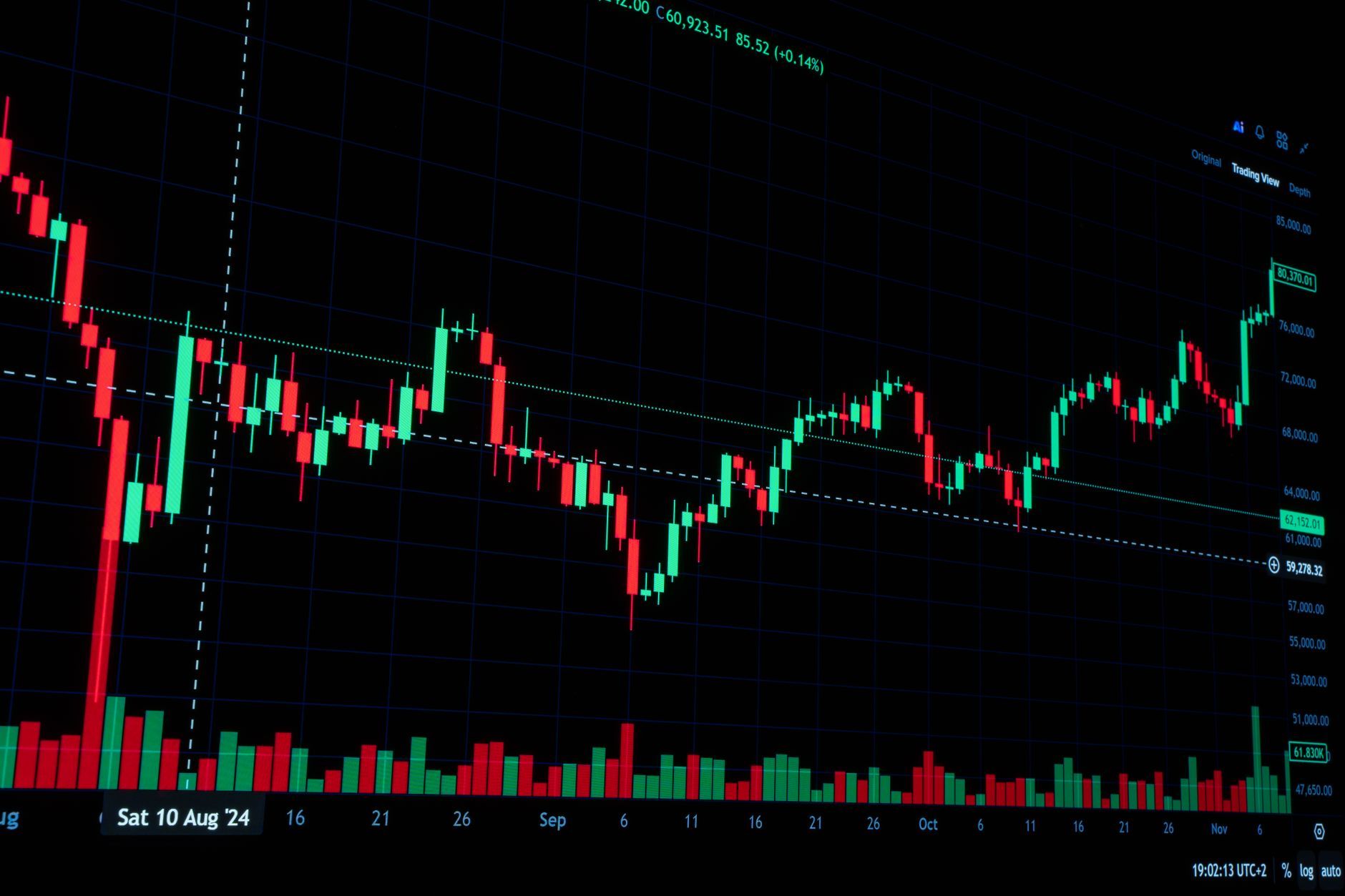
JLP holders need to assess pool exposure, trader PnL, and protocol parameters.
Image source: Photo by Rafael Minguet Delgado via Pexels · License
How Jupiter swap routing works
At a high level, a routing request starts with an input token, output token, amount, and execution constraints. Jupiter evaluates potential paths through integrated venues and returns one or more candidate routes. A route can be direct, such as SOL to USDC, or multi-hop, such as token A to an intermediary asset and then to token B.
A route is an execution plan
The useful way to read a Jupiter quote is as an execution plan with explicit trade-offs:
| Quote component | What it tells the user | Why it matters |
|---|---|---|
| Input and output amount | The assets and nominal amount being exchanged | Confirms the intended trade |
| Route plan | The venues and hops used | Shows where the trade is expected to source liquidity |
| Price impact | The quoted effect of order size on available liquidity | Large trades can move through shallow liquidity quickly |
| Slippage setting | The tolerance for execution worsening before failure | A high tolerance can increase adverse execution risk |
| Fees and network costs | Costs attached to the route or transaction | Needed for comparing routes on a net basis |
A router can split an order across venues when the combined route improves the expected output. That is an optimization decision based on the current quote inputs. It should not be read as proof that every split route will settle at the exact displayed price. Pool balances, competing transactions, oracle-linked conditions where applicable, and network execution can change between quote generation and confirmation.
Caption: Jupiter routing can direct a swap through one or more supported Solana liquidity venues.
What to check before signing a swap
For meaningful trade sizes, review the route details rather than relying on a headline exchange rate. Confirm the output asset mint, the minimum output implied by your slippage setting, price impact, and any platform or priority fees. If a route includes unfamiliar assets or an unexpected intermediary, pause and verify the transaction in a trusted wallet interface or explorer.
Builders integrating Jupiter should use the documented quote and swap flow, test edge cases around token extensions and account creation, and disclose how fees and slippage are set in their interface. Jupiter's official developer documentation is the appropriate starting point for current integration behavior and endpoints.

Jupiter sits between user demand, integrated spot liquidity venues, and its separate perpetuals liquidity system.
Image source: Photo by SHOX ART via Pexels · License
Where Jupiter liquidity comes from
Jupiter's liquidity is external to the router in the sense that it is held and priced by the integrated venues and their users, rather than pooled into one universal Jupiter spot vault. Depending on support and the pair being traded, a route can draw on automated market makers, concentrated-liquidity pools, order-book or request-for-quote style liquidity, and other compatible onchain sources.
This distinction is important for protocol teams. Getting a token into an interface is different from creating durable executable liquidity. A healthy market still needs sufficient inventory, credible pricing, appropriate market-maker or liquidity-provider incentives, and risk controls around launches and volatile events.
Liquidity quality is more than TVL
A large pool balance alone does not establish good execution. Relevant questions include:
- How much inventory is available near the current market price?
- Does liquidity exist on both sides of the market?
- How concentrated is the liquidity, and could it disappear during volatility?
- Are routes dependent on a small number of venues or intermediaries?
- What happens to execution if a pool, market, or integration is paused?
For researchers, the disciplined approach is to inspect current route output for representative trade sizes, then compare it with the underlying venues and onchain transaction results. This avoids treating a single small quote as evidence of deep market liquidity.
How JLP works in Jupiter Perps
JLP is associated with the liquidity pool underpinning Jupiter Perps. In this design, liquidity providers deposit supported collateral assets into a pool, and the pool provides liquidity to the perpetuals system. JLP is the tokenized representation of a provider's proportional claim on that pool, subject to the protocol's rules.
Jupiter's Perpetuals documentation should be treated as the source of record for current supported assets, pool mechanics, fee configuration, limits, and user flows. Those parameters are protocol-specific and can evolve through releases or governance processes.
The economic intuition
A conventional spot AMM liquidity position primarily exposes its provider to the relative prices and trading activity of the paired assets. A JLP position has a broader set of potential drivers:
- Pool asset composition: The net asset value changes as the assets held by the pool change in price.
- Trader profit and loss: Because the pool provides the other side of perpetual positions, profitable trader outcomes can reduce pool value, while trader losses can increase it, subject to the system's stated mechanics.
- Fee flows: Trading, borrowing, funding-related, or other protocol-defined fees may accrue according to the live design. Verify the applicable documentation before assuming a yield source.
- Utilization and risk controls: Open interest, skew, collateral constraints, and caps can affect both the pool's exposures and the availability of markets.
Caption: JLP analysis requires attention to pool composition and derivatives-specific risk, not only displayed returns.
JLP is not a neutral market-making position
A JLP holder may be economically exposed to the composition of the pool and the aggregate outcomes of traders using Jupiter Perps. The exact direction and magnitude of that exposure depend on current pool holdings, open positions, pricing, and protocol rules. It is therefore inaccurate to describe JLP as a fixed-income instrument or a guaranteed source of yield.
The product also carries smart-contract, oracle, liquidation, market-dislocation, governance, and operational risks. Documentation can explain intended controls, but it cannot eliminate the possibility of a loss, an incident, or a change in parameters.
Why Jupiter matters to Solana liquidity
Jupiter's importance is architectural. A widely used router can make fragmented venue liquidity easier to discover and access, while its developer tooling can allow other applications to use the same execution layer. This can reduce integration work for wallets, trading interfaces, and protocol front ends.
Jupiter Perps and JLP add a separate derivatives-liquidity layer. If the pool attracts and retains liquidity under changing market conditions, it can support perpetual trading capacity. If pool risk, incentives, or user confidence deteriorate, derivatives liquidity can tighten. The dependencies are direct: traders need reliable pool liquidity, and liquidity providers need a risk and fee profile they consider acceptable.
Caption: Jupiter sits between user demand, integrated spot liquidity venues, and its separate perpetuals liquidity system.
Practical due diligence for traders, LPs, and builders
For swap users
- Compare quotes at the size you actually intend to trade.
- Check route details, price impact, minimum received, and slippage before approval.
- Verify token mints for unfamiliar assets, especially around new launches and similarly named tokens.
- Expect execution conditions to change quickly in volatile markets.
For prospective JLP holders
- Read the current Perps and JLP documentation before depositing.
- Identify the pool's supported assets and how their price movements affect net asset value.
- Understand that trader PnL and protocol fees can both influence outcomes.
- Review risk parameters, withdrawal conditions, and current pool or market constraints.
- Avoid assessing the position from a displayed annualized figure alone.
For protocol teams and integrators
- Test routing behavior for your specific mints and expected order sizes.
- Build clear user disclosures around slippage, transaction failure, fees, and token verification.
- Monitor integration changes through official developer channels rather than relying on old interface behavior.
- Design liquidity programs around executable depth and market resilience, not visibility alone.
Bottom line
Jupiter's swap router helps users access distributed Solana liquidity through a single quoting and transaction-building layer. JLP serves a separate function: it represents liquidity supplied to Jupiter Perps and carries exposure to the pool's assets, derivatives activity, and protocol-defined fee flows. The distinction matters for anyone evaluating execution quality, integrating swaps, or considering liquidity provision.
The most reliable evaluation starts with current official documentation, a review of the exact route or pool conditions, and a clear separation between quoted outcomes and realized risk.
Frequently asked questions
What is Jupiter's role in Solana DeFi?
Jupiter is a routing and aggregation layer for Solana token swaps, and it also operates products including Jupiter Perps. For swaps, it can compare supported liquidity paths and help construct transactions. For perpetuals, its liquidity system uses JLP as the tokenized representation of the designated pool.
Does Jupiter hold all of the liquidity used for swaps?
No. Jupiter routing can access liquidity from supported external Solana venues and markets. The exact sources available for a trade depend on current integrations, the token pair, market state, and route constraints.
What does JLP represent?
JLP represents a proportional position in the liquidity pool used by Jupiter Perps, subject to the protocol's current rules. Its value can be affected by pool asset prices, aggregate trader profit and loss, fees, utilization, and risk parameters.
Is JLP yield guaranteed?
No. JLP does not provide guaranteed yield or principal protection. Any return can vary with fees, pool composition, trader outcomes, market prices, protocol parameters, and operational or smart-contract risks.
How should I assess a Jupiter swap quote?
Check the output amount, minimum received, route plan, price impact, slippage setting, fees, and token mints. For larger trades, compare quotes at the intended size and recognize that market conditions can change before the transaction confirms.